Showing posts with label Photography. Show all posts

Sunday, May 7, 2017

Joseph Mougel: Artist Now Lecture Series

Joseph Mougel: Artist Now Lecture Series

by Lainey Koch

Joseph Mougel's work as a photographer started during his time in the Marine Corps. Today, his work ranges from performance art, to video, to photography. I was interested to learn more about the work of his since he's a familiar face in the photo department that I frequently interact with, and his lecture did not disappoint. 

I appreciated hearing about Joseph's performance art and how he incorporates photography as documentation of these processes. As a photography major it's easy to forget that you can use your photography as documentation of other forms of art you are creating. 


Luscinia Xanthoplasticus (video still)

Hearing more about the series Blanc was something that caught my attention because it's work that I always think of when discussing work with Joseph. This was work heavily inspired by his time in the Marines and his subjects were chosen based off of characteristics that Joseph knew to be things recruiters looked for. He discussed the "moment of erasing and becoming" when preparing his subjects to be photographed for this body of work. 

Blanc, 007


It was inspiring to hear one of my instructors speak so passionately about his work in a lecture setting. It's a valuable experience to learn about the perspectives of other professionals in the photography field, especially someone that we students interact with on such a regular basis. 

Thursday, May 4, 2017

Artist Talk - Sara Stathas

Artist Talk - Focus Photography Club
Sara Stathas
Photographer

By: Kylee Jo Diedrich

   Sara Stathas is a renowned photographer both in the Fine Art realm and Editorial photography realm. Stathas visited the Focus Photography Club to present her work and process. Instead of going over each project she photographs, she discussed her process and made her artist talk more of a discussion between the club members and herself. In the beginning of Stathas' talk she went over some of her favorite shoots for editorial work as well as her own self guided editorial shoots based on her own interests.
   One project in particular she discussed was her Disabled Deer Hunt was interesting because she showcased a group of people most likely unknown to the greater population. She followed the group of men out into the forest for a deer hunting excursion to witness the groups dynamics.


Disabled Deer Hunt   Sara Stathas


  After Stathas discussed her life's work she opening up the conversation to the club to answer questions. Some questions regarded her job as an editorial photographer. What the job entails, ways of becoming an editorial photographer, as well as how to stay in the zone of making art. Her answers were vague mostly because everyone is different and she was lucky in some cases. For example, Stathas shared the only reason she was the photographer for the Milwaukee Brewers was because of friend of hers was also a photographer for the Brewers. She also discussed how to stay connected and network one's way into receiving editorial jobs. Overall I was very enlightened about the job world of photography and learned great ways of staying connected and be open to job opportunities. At the end of her talk I went up to Stathas and asked further questions.

Artist Talk - Kayla Massey

Artist Talk - Focus Photography Club
Kayla Massey
Photographer

By: Kylee Jo Diedrich

   Kayla Massey is a graduate student attending UWM focusing on photography. Kayla visited the Focus Photography Club for their artist talk series and discussed a variety of her work. She began speaking about her undergraduate thesis project My Nurse Today is... and disclosed a terrible part of her history. Her undergraduate thesis project was about her going through cancer treatment, photographing herself change. This project was her way of coping with being stuck in a hospital room for months on end. Her photographs are both haunting and eye opening as well as sad and sterile looking.


                           My Nurse Today is... Kayla Massey


After she discussed her undergrad career, she continued on discussing her current project for her Masters of Fine Art degree. She went over the numerous paths she went down to come to her final rendition of her thesis. She discussed problems she ran into regarding research, photographing people and finally deciding on the perfect way to present her photographs. Hearing Massey discuss her path through school, there was a realization among the listeners that no matter how many attempts one makes on a project, it is never finished. Everything can be worked on more to produce a more evocative piece of work. Unfortunately since her thesis project is showcasing come May 19, 2017 images of her latest work are not available for viewing on her website.

  I felt that Kayla Massey's talk was perfect for the exiting senior undergraduates because she showed us that as we continue to work on our art there is always room for improvement. To give up on a project simply because there were some issues is foolish because sometimes the only way to learn is to make mistakes.

Monday, March 27, 2017

Ideas- Phenomenon- Susan Worsham

Susan Worsham 
By: Raven Mrozek

Susan Worsham, born in Richmond, Virginia, is considered to be a recent emerging artist. She took her first photography class in college while she was studying graphic design. Her work is both metaphorical and aesthetically soft and stunning. I am in love with her interpretation on memory and how she combines both beauty and loss together into a single image.  


Bittersweet on Bostwick Lane is Susan Worsham's series that most directly speaks to this idea of both the beauty and loss in a memory. Worsham discussed in her artist statement how she has lost bother of her parents, however the suicide of her brother is what makes its way into her works and shapes the way she photographs. I noticed she incorporated honeysuckle, stains, and red in a lot of images metaphorically tying together the loss and the beauty. Worsham shared the first line of her brothers suicide letter which said "I arrived home just about the time the honeysuckle blooms" which made me as a viewer create a connection with the use of the honeysuckle. She expressed how beautiful yet sad it was that her brother took in the beauty of his surroundings knowing it would be his last time. This loss and attention to beauty seeped into this series Bittersweet on Bostwick Lane. The sweet memories Worsham incorporated in the series were buttering her brother's bread growing up, homemade strawberry jelly, the intangible landscape, and sweet flowers. There is a sense of poetry in how she photographs.


By The Grace of God is another beautiful series of Susan Worsham that I enjoy. The title of this series comes from the old saying "American by birth, southern but the grace of god." Her series explores her past home from the neighbor yards to the hospitality of the surrounding peoples, and the character strangers had in welcoming her into their home and telling their story. 


Sunday, March 19, 2017

Ideas - Chris McCaw

Chris McCaw
Photographer
By: Kylee Diedrich


Chris McCaw is a contemporary photographer who has been working with the medium starting at the age of 13.  He taught himself photography with fisheye lenses and film in the 80s.  In the 90s McCaw bought a 4"x5" camera to begin working with platinum/palladium printing processes, he used other with larger format cameras as well.  He has since worked with other analog techniques and explores extreme possibilities of the medium. 


The project I find most interesting is his project Sunburn where he explores the limitations of film.  This is what McCaw states about his process: 
In this process the sun burns its path onto the light sensitive negative. After hours of exposure, the sky, as a result of the extremely intense light exposure, reacts in an effect called solarization- a natural reversal of tonality through over exposure. The resulting negative literally has a burnt hole in it with the landscape in complete reversal. The subject of the photograph (the sun) has transcended the idea that a photograph is simple a representation of reality,  and has physically come through the lens and put it’s hand onto the final piece. This is aprocess of creation and destruction, all happening within the the camera.


McCaw makes contemporary photography, but addresses the history of the medium throughout his process.  He learns more about his method of making as years go on and learns from military aerial reconnaissance camera optics and the history of photo papers.  McCaw discusses the love for his process as such:
 This project has got my mind working overtime and has rejuvenated my faith in analog photography. My favorite part is watching smoke come out of the camera during the exposure and the faint smell of roasted marshmallows as the gelatin cooks!

When relating McCaw's work with my own, I find the art of photography fascinating.  The functions of the camera, and how hands-on the whole process can be.  I also enjoy the uncertainty in the process of analog and love many the possibilities with photography. 

Artist Talk - Kevin Miyazaki

Kevin Miyazaki
Photographer
By: Kylee Diedrich

Recently Kevin Miyazaki spoke to students, faculty, and friends of UWM at the Artist Now! lecture series. Miyazaki discussed his fine art and commerce work from his beginnings to his current work.  I found the way he talked about his work to be inspiring.  His vision is extremenly refined and without the drama that young artists grapple with as they are learning.  Miyazaki is a talented photographer, with a lifetime of knowledge in the medium of photography.

The project I was drawn to the most was his project Perimeter.  I found the project particularly interesting because it loosely relates to my own senior thesis project.  He drove the scenic route around Lake Michigan photographing the people along the shores, as well as an image of the lake that day.  His approach is more narrow than my own concept, but I find his work to be one inspiration for where I could take my project in the coming years.  His photographs are beautifully quiet and thought provoking as they take the viewer along the shores of Lake Michigan.
Though Miyazaki's project was the result of a commission, I chose my senior thesis based on the connection I have to the lakes, and what I find so interesting about them.  Miyazaki's project shows the variety and connectedness between the populations and people who live and depend on the fresh water of Lake Michigan.  The images share the variety in the lake, as well as the variety of people who utilize it daily.  I look up to Kevin Miyazaki and use him as inspiration for my future as a graduating senior. 

Field Trip - Milwaukee Art Museum Herzfeld Center

Milwaukee Art Museum
Herzfeld Center

by: Kylee Diedrich

On Wednesday, March 1st my photography class visited the Herzfeld Center at the Milwaukee Art Museum to view contemporary photography in an informal setting. The majority of the images were without frames or glass, directly from the storage files. We were able to be inches away from the museum's worthy collection. Our instructor and the Collections Manager chose images that were either historically important or cutting edge. Not often do students or the public get the chance to view work in such an intimate way.

The trip exposed us all to contemporary photographs and photographers who are working with new techniques or old techniques in a new manner.  We saw twenty-five images close up.  Some that I found most interesting were Robert Heinecken's A Case Study in Finding an Appropriate TV Newswoman, 1984 (Top Left); Marco Breuer's Untitled (C-784), 2008 (Top Right) ; and Christopher Russell's Explosion #26, 2014 (Bottom).


Overall, the field trip to the Herzfeld Center to be a great way to expose us to the new ideas revolving around contemporary photography and the ways artists are developing the medium of photography, what it means, and what it can be in the future.  

Artist Visit - Barbara Miner

Barbara Miner
Photographer & Journalist

By: Kylee Diedrich

On February 20, Barbara Miner visited our class and discussed her work as a Photojournalist.  She went over her years as a photographer with the Milwaukee Journal Sentinel as well as the projects that she has completed most recently.  What I found amazing listening to her, was her approach to the medium.  She seems to always have a journalistic eye when she is photographing her subjects.  From her  53206MKE project to her Cuba project, she always found ways to use the camera to capture the subject, not just to capture it, but to start a discussion.  Each image she takes comes with a story, sometimes a story only she knows.

The project I felt most inspired by was the book she produced with her partner when they were at the Standing Rock Camp. The images spoke about an injustice many media news outlets were not and have not discussed. The images offer a view into the battles indigenous people's are having to fight, all because of greedy oil companies and politicians who have zero regard for indigenous rights. Miner's website does not show any of her Standing Rock photographs, but they live on in my memory. The signs posted around the camp, the many depictions of native culture and the sense of community within the photographs were inspiring. Miner brings people who could not stand with Standing Rock at the camp a way to be visually engaged and aware of the injustice.

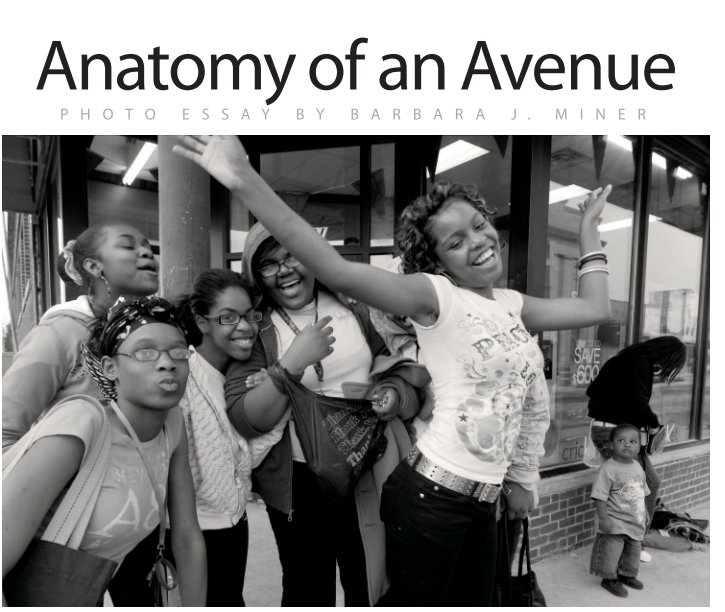
I find Miner's work to be interactive. In her project Anatomy of an Avenue, she truly takes the viewer from the East Side of Milwaukee on a trip into the western suburbs beyond the city.  Block after block, she photographs what she sees, the people she interacts with and changes people often chose to ignore.  Her project shows a variety of social divisions over the entire stretch of the avenue across a city.

I encourage everyone to view Barbara Miner's work about Milwaukee, her photographs truly celebrate as they document the communities within Milwaukee. I am thankful for Miner's visit to class, and enjoyed hearing her talk about her process, photographic career and her inspirations as she moves forward in making new work. 


Landscape - Penelope Umbrico

Landscape: Penelope Umbrico
By Deshawn Brown

Penelope Umbrico is an artist / photographer known for appropriating images found using search engines and picture sharing websites. Her work has been published in books, exhibited and she has received awards. She was born in Philadelphia in 1957 and graduated from the Ontario College of Art and Design. She received her MFA from the School of Visual Art and PS1 Contemporary Art Center, New York. Currently, she is a faculty member in the School of Visual Arts MFA Photography, video, and related Media Program and resides in New York City. Her work is in collections including International Center of Photography (NY), McNay Museum of Art (TX), Metropolitan Museum of Art (NY), Museum of Contemporary Photography (IL), Museum of Contemporary Art, San Diego (CA), Museum of Modern Art (NY).


I feel her work,  is very simple. She doesn’t do anything on her own but search images on google, yahoo, etc. She then combines these images together into one whole rectangular collage. I understand that she wants to show the audience about how we  use the internet to consume and create materials over a period of time,but I wish there was a better outlook about the way they were captured.

Ideas - Phantasm - Mark Klett and Byron Wolfe


Ideas/Phantasm: Mark Klett and Byron Wolfe
By Deshawn Brown


Byron Wolfe is an associate Professor and the Program Director of Photography at the Tyler School of Art, Center for the Arts, at Temple University in Philadelphia. In his career as artist / photographer, he has published 4 books. One book has been solo, the other three books have been done collaboratively. Wolfe’s photographs connect his interests in time, change, and place. Currently, he is the Program Director for Photography at the Tyler School of Art.

Mark Klett is also an American photographer. He photographs the intersection of cultures, landscapes and time. Before coming into the world of photography, he had a background as a geologist and uses what he has learned to create the re-photographed images. Klett has received fellowships from the Guggenheim Foundation, the National Endowment for the Arts, the Buhl Foundation, and the Japan/US Friendship Commission. His work has been exhibited and published both nationally and internationally for over 30 years, and his work is held in over 80 museum collections worldwide.


I think that their collage ideas are somewhat like Penelope Umbrico, bothworking with re-photographed images. I do like to see the changes in the landscapes because, as humans, I do believe we are damaging the world around us and the changes from where we are and where were a century ago look totally different.
Artist Talk: Kevin Miyazaki
By Deshawn Brown


Kevin Miyazaki is a local artist/ photographer living in Milwaukee, Wisconsin. He addresses  issues around Wisconsin; about family, history and both personal and institutional spaces. His photos have been shown at The Madison Museum of Contemporary Art and The Rayko Photo Center and in solo exhibitions. Kevin is an adjunct faculty member at the Milwaukee Institute of Art & Design and was an artist in residence at the Center for Photography at Woodstock in 2015. I really enjoyed the portraits of the people that Kevin came across. He captured these people as who they are. By removing the background, the artist focused dead on all the attributes that describes each person: their hair, body size, clothing, posture, etc. The photos of the Great Lakes where he found his subjects were far less interesting to me.


Death & Destruction - Sarah Charlesworth

Sarah Charlesworth was born in 1947 in East Orange, New Jersey. She went to Barnard College where she received her BA and lived and worked in New York City. She died in 2013 of a brain aneurysm.

Charlesworth is a conceptual artist who looked at the photograph and "it's ability to deconstruct our shared symbols and public images in ways that articulate and question the values and beliefs of our culture." (artspace.com). Her website is clean and crisp. The home page was minimal, alongside an image from her Natural Magic series, only contacts for her estate and gallery business inquiries were available. The menu tabs were categorized with a section for each relevant topic.The website did not have an artist statement, so I took it upon myself to do extra research to understand her work and her life.

I was thoroughly impressed with the amount of work that was displayed, all of her works clearly organised. Each was broken up by years of the body of work, but also had the option of looking at everything at once. Some of her works had a shot text "about" the piece. I feel conceptual art is at times hard to grasp, so having a starting point is helpful in looking at and dissecting the work. My only issue was that not all of her bodies of work had an "about" text and half of the bodies that did, didn't have functioning text. Instead I was stuck with an unloaded image icon where the text should be.

The video explaining the story behind The Jumping Man, was the most relevant to that specific image.This work relates closely to that of the iconic 9/11 image of The Jumping Man. Unlike the images from Stills, the outcome and intention of the jumper is very well known. This type of image is iconic in the fact that as stated by the artists "it was the only photo that showed the death of our people that day". The image was quite, but powerful. Though it showed no gore, it became infamous. The Jumping Man is also a very relatable image because the viewer can put themselves in the situation and see that as a potential choice and rationalization behind the decision given the circumstances. The images from Stills are less static in the motions of the jumper, but they still convey a similar image without the backstory. They show a defining moment.
Charlesworth is most known for her Modern History which consists of enlarged images of newspapers with everything but the images and headlines removed. This work is still relevant to today in regards to how we as viewers, and the media itself ,documents and remembers war/crime/and headlines, but few details.

Questions: How do you feel the media portrays war/death/destruction news in the contemporary/present day?

Landscape - Close Observation - David Liittschwager

David Liittschwager

by: Allison Krenz


David Liittschwager is a photographer and scientist whose main focus is on Natural History. 
Liittschwager studied under Richard Avedon, and started working in advertiing, but very quickly realized his passion was in what was hidden within the landscape. Liittschwager's work shows us what is unseen, as he works to create portraits utilizing macro photography. While at first glance his work seems clinical, he insists his work is tiny portraiture instead. 

One Cubic Foot

In his work One Cubic Foot (pictured above) Liittschwager isolates the creatures that pass through- one cubic foot- of land and takes their photo. It is endearing that he views each organism as it's own subject, but his work does not reflect this stance. It is unclear why he displays them all together when in interviews with him, he says they are individual portraits. Liittschwager does not have a lot of published work that has been deemed "art", but his name has appeared and will continue to frequently appear in scientific journals.

Tuesday, March 14, 2017

Ideas/Phantasm - Eastman House

Eastman Museum: A Matter of Memory
By Mandy Litwin

The Eastman Museum located in New York that is named after famous photographer George Eastman. The Eastman Museum, opened in 1949, is known for their grand collections of photography and cinema. They host many exhibitions each year with a wide range of work including photography, cinema, and other works concerning technology.


One exhibition that took place at the end of 2016 was called A Matter of Memory: Photography as Object in a Digital Age. It discusses the that fact that much of the photographic images we see today are digital and not physically tangible. It also touches on how our relationship to memory is changing with a constant exposure to images, quite literally every day of our lives. Artists involved in this exhibition produce work that relate to this idea of memory.

LED Lights - Jason Lazarus


One artist in particular is Jason Lazarus. He is a conceptual and experimental photographer. For his series titled “The Rickshaw”, he used played with the idea of a photo as a physical object in a unique way. One piece installed in the gallery mimics the LED lights that are often found framing storefronts in his hometown of Tampa, Florida. Though businesses may have gone under, the lights remain lit, outlining these voids. They symbolize what once was. His other pieces touch on similar ideas.