Showing posts with label Art. Show all posts

Sunday, May 14, 2017

Event Review - What Ever Happened To Passion

Passion
Raven Mrozek
I recently attended an artist lecture given by two artists out of New York. I will say that If I have learned anything from this lecture, I have learned how not to give a presentation, especially about my own artwork. 
While the first artist's style of painting wasn't necessarily a style I particularly spend time viewing, I did]  somewhat connect to the paintings she  and their descriptions on feeling stuck in a space due to a traumatic event. I respected this  and understood that for her, she was expressing being stuck in an interior space while I connected in being stuck in a mental space. The second "painter" I struggled with most. I put painter in quotations because I felt as though he didn't defend his style of work which was one issue I had with the lecture given. I feel that when you are working in art, defend what you do and be able to explain your choices in a logical sense. He called himself a painter when presenting some of his more recent works. He says paintings and I say paper cut outs, collage, and sculpture. I struggled wrapping my head around the idea that the works he presented were paintings, and I was waiting for an explanation on his process so I could try and understand why he called him self over and over again, a painter. While he spent so much time calling himself a painter and convincing us of his work, when asked a question at the end of his lecture on his work, he told the audience that he "would not call himself a painter."
While I was mildly confused by both painters, the one thing that bothered me most was the complete lack of passion for ones work. The first artist's lecture sounded like she was rushing through a script and breezed over her work, making me feel like I needed her to convince me she loved her work. Granted this is how I felt during the lecture, she did surprise me during her unscripted responses to questions asked by students. There she dug into her work and presented the passion in it, which I appreciated, and just blamed the rushed lecture on nerves. 
The second artist was another story. There was a complete disconnect with him and the audience. He spent the entire time staring at his computer, forgetting what the titles of his work even were then blowing them off, and trying to convince us who he was. Knowing how the first artist operated I gave him the benefit of the doubt which backfired. The entire time students were asking questions he was sitting back in the corner away from them and not even looking at or hardly acknowledging them. When a student addressed him then he would stand up and say "sorry what did you ask me?" He would then respond with maybe a couple sentence answer, but the majority being two words.
I don't mean to sound harsh, because both artists works were interesting in a wonderful way, but I learned exactly what not to do when discussing my work. Art is a tangible expression of human thought process which deserves passion to make it relatable, and if not relatable then thought provoking or powerful even if it is in the most subtle of way.


Friday, May 12, 2017

Guerilla Girls
Claire Haggarty

The Geurilla Girls are a group of feminist activist artists who wear gorilla masks in public due to their “Geurilla” activist tactics. They began in 1985 by hanging posters voicing their grievances about women in the art world in secret and escalated after every day women started contacting them about how their work not only related to artists, but to all kinds of women.  These women bring to light the discrimination of women in gender roles, pop culture and other art.  Their most well-known poster (shown below) shows a woman in a state of undress with their well known gorilla mask on, begging the question “Do women have to be naked to get into the Met. Museum?”. 


The Geurilla Girls have now done hundreds of projects aside from these posters including books, exhibitions at museums, videos and stickers.  These women continue to bring to light the inequality and discriminatory practices against women and other discriminated groups of the art world as well as the world in general.


Sunday, March 19, 2017

Ideas - Chris McCaw

Chris McCaw
Photographer
By: Kylee Diedrich


Chris McCaw is a contemporary photographer who has been working with the medium starting at the age of 13.  He taught himself photography with fisheye lenses and film in the 80s.  In the 90s McCaw bought a 4"x5" camera to begin working with platinum/palladium printing processes, he used other with larger format cameras as well.  He has since worked with other analog techniques and explores extreme possibilities of the medium. 


The project I find most interesting is his project Sunburn where he explores the limitations of film.  This is what McCaw states about his process: 
In this process the sun burns its path onto the light sensitive negative. After hours of exposure, the sky, as a result of the extremely intense light exposure, reacts in an effect called solarization- a natural reversal of tonality through over exposure. The resulting negative literally has a burnt hole in it with the landscape in complete reversal. The subject of the photograph (the sun) has transcended the idea that a photograph is simple a representation of reality,  and has physically come through the lens and put it’s hand onto the final piece. This is aprocess of creation and destruction, all happening within the the camera.


McCaw makes contemporary photography, but addresses the history of the medium throughout his process.  He learns more about his method of making as years go on and learns from military aerial reconnaissance camera optics and the history of photo papers.  McCaw discusses the love for his process as such:
 This project has got my mind working overtime and has rejuvenated my faith in analog photography. My favorite part is watching smoke come out of the camera during the exposure and the faint smell of roasted marshmallows as the gelatin cooks!

When relating McCaw's work with my own, I find the art of photography fascinating.  The functions of the camera, and how hands-on the whole process can be.  I also enjoy the uncertainty in the process of analog and love many the possibilities with photography. 

Artist Talk - Kevin Miyazaki

Kevin Miyazaki
Photographer
By: Kylee Diedrich

Recently Kevin Miyazaki spoke to students, faculty, and friends of UWM at the Artist Now! lecture series. Miyazaki discussed his fine art and commerce work from his beginnings to his current work.  I found the way he talked about his work to be inspiring.  His vision is extremenly refined and without the drama that young artists grapple with as they are learning.  Miyazaki is a talented photographer, with a lifetime of knowledge in the medium of photography.

The project I was drawn to the most was his project Perimeter.  I found the project particularly interesting because it loosely relates to my own senior thesis project.  He drove the scenic route around Lake Michigan photographing the people along the shores, as well as an image of the lake that day.  His approach is more narrow than my own concept, but I find his work to be one inspiration for where I could take my project in the coming years.  His photographs are beautifully quiet and thought provoking as they take the viewer along the shores of Lake Michigan.
Though Miyazaki's project was the result of a commission, I chose my senior thesis based on the connection I have to the lakes, and what I find so interesting about them.  Miyazaki's project shows the variety and connectedness between the populations and people who live and depend on the fresh water of Lake Michigan.  The images share the variety in the lake, as well as the variety of people who utilize it daily.  I look up to Kevin Miyazaki and use him as inspiration for my future as a graduating senior. 

Field Trip - Special Collections UWM Libraries

UWM Special Collections
Artist Book Collection

by: Kylee Diedrich

Wednesday, March 8, as a class we visited the Special Collections at the UWM Library.  I have visited the area many times before, for work related events and also class events.  I find the Special Collections to be full of great resources and objects to help students learn and explore possibilities in many realms of study. Librarian Max Yela placed numerous photographic artist's books out for us all to view.  Some were unique hand-made artist's books, while many were trade publications.

The books I found most interesting and I engaged with most were the artist-made books that showed the artist's hand in some way.  They were unique and visually appealing, giving a unique views on someone's idea of a book. Nothing is wrong with printed books from a commercial publisher, I just found myself drawn to the special and unique books.

While talking with Max Yela more individually he brought out more artist books for me to look at. He also helped me decide a possible direction for my own artist book for my senior thesis project.  I have been trying to decide a direction to go and visiting the Special Collection and talking with Max I was able to decide on a medium and style.


These artist books were among the ones Max brought out to me that influence my decision to build my own  artist's book.  To create something by hand, and create a physical object that is not reproducible. 

Max also pointed out an artist book (one of many copies) made by one of my professors Nicolas Lampert. I found his style to be interesting and inspired me to think more about how I would incorporate my images in the book as well as binding techniques. 

While viewing the other books, I found page numbering, text, poems, and sound to be interesting approaches to creating a book.  I decided on a style I liked in terms of image, text, and page number placements that can add to what my project is trying to address. This visit made me more excited about my own book making and I look forward to what might transpire in the next half of the semester. 


Field Trip - Milwaukee Art Museum Herzfeld Center

Milwaukee Art Museum
Herzfeld Center

by: Kylee Diedrich

On Wednesday, March 1st my photography class visited the Herzfeld Center at the Milwaukee Art Museum to view contemporary photography in an informal setting. The majority of the images were without frames or glass, directly from the storage files. We were able to be inches away from the museum's worthy collection. Our instructor and the Collections Manager chose images that were either historically important or cutting edge. Not often do students or the public get the chance to view work in such an intimate way.

The trip exposed us all to contemporary photographs and photographers who are working with new techniques or old techniques in a new manner.  We saw twenty-five images close up.  Some that I found most interesting were Robert Heinecken's A Case Study in Finding an Appropriate TV Newswoman, 1984 (Top Left); Marco Breuer's Untitled (C-784), 2008 (Top Right) ; and Christopher Russell's Explosion #26, 2014 (Bottom).


Overall, the field trip to the Herzfeld Center to be a great way to expose us to the new ideas revolving around contemporary photography and the ways artists are developing the medium of photography, what it means, and what it can be in the future.  

Artist Visit - Barbara Miner

Barbara Miner
Photographer & Journalist

By: Kylee Diedrich

On February 20, Barbara Miner visited our class and discussed her work as a Photojournalist.  She went over her years as a photographer with the Milwaukee Journal Sentinel as well as the projects that she has completed most recently.  What I found amazing listening to her, was her approach to the medium.  She seems to always have a journalistic eye when she is photographing her subjects.  From her  53206MKE project to her Cuba project, she always found ways to use the camera to capture the subject, not just to capture it, but to start a discussion.  Each image she takes comes with a story, sometimes a story only she knows.

The project I felt most inspired by was the book she produced with her partner when they were at the Standing Rock Camp. The images spoke about an injustice many media news outlets were not and have not discussed. The images offer a view into the battles indigenous people's are having to fight, all because of greedy oil companies and politicians who have zero regard for indigenous rights. Miner's website does not show any of her Standing Rock photographs, but they live on in my memory. The signs posted around the camp, the many depictions of native culture and the sense of community within the photographs were inspiring. Miner brings people who could not stand with Standing Rock at the camp a way to be visually engaged and aware of the injustice.

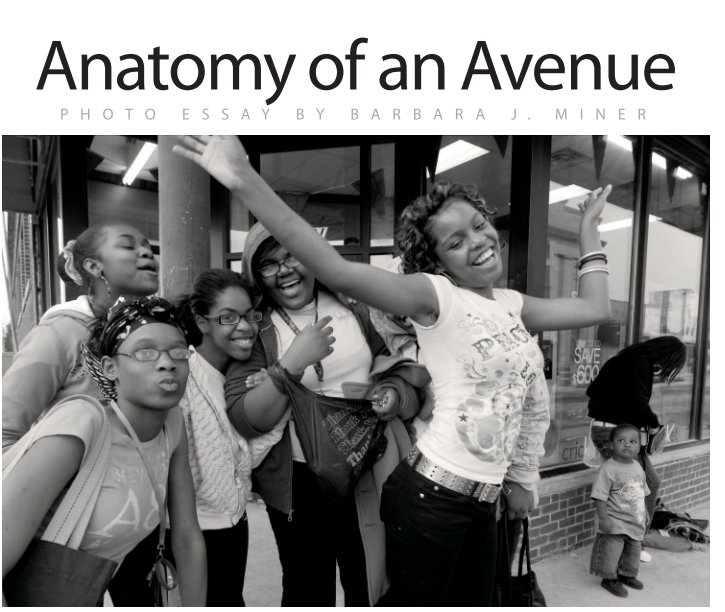
I find Miner's work to be interactive. In her project Anatomy of an Avenue, she truly takes the viewer from the East Side of Milwaukee on a trip into the western suburbs beyond the city.  Block after block, she photographs what she sees, the people she interacts with and changes people often chose to ignore.  Her project shows a variety of social divisions over the entire stretch of the avenue across a city.

I encourage everyone to view Barbara Miner's work about Milwaukee, her photographs truly celebrate as they document the communities within Milwaukee. I am thankful for Miner's visit to class, and enjoyed hearing her talk about her process, photographic career and her inspirations as she moves forward in making new work. 


Report - Artist Talk- Joseph Mougel

Joseph Mougel

by: Allison Krenz

On February 15th at UW Milwaukee, Milwaukee resident and artist Joseph Mougel shared a part of his process and his story. Having enlisted in the Marines, Mougel spent his time in the Marines looking for moments of humor. The humor he found carries itself into his other work, such as Yello-Cake, a project in which he actually made, canned, and marketed his own special brand of Uranium. The most interesting thing about Mougel's work is that the process that goes into making his work is almost always a part of the final piece. No one piece stands alone as one final image (despite his being a photographer) but rather each body of work can be viewed as a performance from start to finish. 

Joseph Mougel in the kitchen for Yello-Cake

Joseph Mougel stitches together art, photography, performance, science, and media, which makes him an artist worth watching for a large audience. The biggest take away from Mougel's presentaton is to never ignore any part of your process. Living and performing your work is the best way to explore every facet of it, and make the best experience possible.

Tuesday, March 14, 2017

Kevin Miyazaki

Kevin Miyazaki
By Mandy Litwin

Kevin Miyazaki began his talk by mostly showing us a huge range of the work he has done in a more commercial setting. His craft and technique with his photography is very admirable. With every photo of his you see, there is an obvious sense of care. This includes his attention to lighting and composition, no matter the subject matter. During his talk, the audience learned about his experience with shooting all over the world, and for many different occasions and events.


The way he talks about his work also feels very confident. He knows what he is doing – and he does it. This is not only applicable in his commercial photography. As an artist, Kevin has a pretty clear mindset. A lot of his work is influenced by his family’s histories. His Guide to Modern Camp Homes project was very interesting. I like that he, in a sense, remixed a past real-life template to portray his concept. The presentation is unique and informs people on an important piece of history.


As someone who enjoys portraiture, his Perimeter series sat well with me. Though it is simple, I enjoy the idea of documenting people relatively casually. The images are beautiful and executed again with great care.


Sunday, March 12, 2017

Landscape- James Balog

James Balog
Photographer

By: Kylee Diedrich

James Balog is a photographer and geographer breaking new ground in documentation of human modification of the planet.  He has become a premier advocate for the earth and the environment. Balog founded the Extreme Ice Survey to photograph the receding glaciers in order to aid his presentations world wide about climate change.  His work with the EIS evolved into a documentary about the receding glaciers called Chasing Ice which won an Emmy Award in 2014.  Balog also founded Earth Vision Institute, a non-profit aiming to educate and inspire society to explore and understand the environment.  

Balog's photography has been shown in National Geographic numerous times and is considered inspiring and exhilarating, as well as confirming his passion as an artist, scientist, explorer and adventurer.  His role as an ambassador for Nikon,  National Geographic, his family and the companies he has founded together contribute to support his projects.  He goes to extensive lengths to share his knowledge in the hope of a better future.  

I find Balog's work revolutionary and groundbreaking in the field of photography. He gives all photographer-adventurers hope that they too can begin a conversation about topics like climate change.  He proves that with both commitment and ambition any project can be realized, but with  research it could become a most important contribution to the science of climage change.  

,
                                                         
 Chasing Ice- James Balog


Linblad Cove, Antarctic Peninsula, Antarctica, 2011 from ICE

Event Report - Joseph Mougel - Artist Talk

Joseph Mougel
Photographer

By Kylee Jo Diedrich

Recently Joseph Mougel treated Artist Now! students to a lively talk about his artwork. He gave an overview of projects he completed while a Marine to his current work as a professor and Photography Area Head at the University of Wisconsin-Milwaukee.  Joseph went from handing out slide projectors to his fellow Marines, to creating videos of himself digging holes.

I found his most memorable body of work to be Blanc, a series of portraits of people painted stark white, in military uniforms.This work creates a discussion about the invisibility and uniformity the uniforms gave people.  He explained how his feelings evolved as he wore his uniform and he used this projects to meditate upon his new civilian life.

Blanc 004

Another project in which Mougel focused on his life in the military is Rabbit to Bee, showcasing the altered life he now leads. Arguably, most of his work relates back to his life as a Marine when everything was systematic, organized, repetitive, and inquisitive. His hole digging recalls when he had to dig numerous holes on the base. His videos of people following orders links back to when someone was telling him what to do or say.  I find the meditative nature of Mougel's work revealing to those who never experienced military life.  


The way Mougel approaches his work is similar to mine.  I think about the way the images can subtly discuss a topic and work many iterations of a project until a good solution can be made.  He is a great mentor and his process in creating is spread amongst all of his students.  Mougel uses humor, satire, environmental interests, and his military career to fuel his work.  I too use my past to influence my work as I grow as a photographer in today's world. 

Tuesday, March 7, 2017

Event Review Guerrilla Girls

Guerrilla Girls- MIAD Talk
By: Ryan Cindric

The Guerrilla Girls are female activist artists who first came together in 1985. The group has consisted of over 55 people with dedication ranging from a few weeks to over a few decades. They have kept their identity a secret all these years through the use of gorilla masks, its also goes well with their name (pause for chuckle).  The Guerrilla girls, in their own words, "undermine the idea of a mainstream narrative by revealing the understory, the subtext, the overlooked, and the downright unfair. We believe in an intersectional feminism that fights discrimination and supports human rights for all people and all genders."

Going into the talk I only had a very limited idea of what the girls were all about, however my mind was blown by all of the different issues they shed light on. Throughout the duration of their talk the covered the basic background knowledge of themselves, but once we got into it ideas and issues started flying around like poop in the monkey enclosure. I had no idea that the art world was as corrupt as it was; museum board members having the museum buy their personal collections for millions of dollars. As well as this, i also never knew just how unrepresented female artists, and artists of color were in museums, sometimes not even having any representation at all. Lastly, the issue of women artists trying to make a living; it seems that to make a living, in the way that we picture some of the greats, you must be male; less than 3 % of artists in the Modern Art sections are women, but 83% of nudes are women.

This was an incredibly eye opening talk into a world that i clearly don't know much about. I am incredibly thankful I had the opportunity to go and am also incredibly thankful that the Guerrilla Girls exist to expose the corruption and misrepresentation in the art world.
Landscape: Pedro David
By; Ryan Cindric

Pedro David is a Brazilian visual artist and photographer with a bachelors in journalism. He has been dedication himself to the interpretation of the relationship between people and their environment. In it's various forms and context. 


His series- Stone Men, is an interpretation of the daily life in the Brazilian northeastern outback; the inhabitants of that region, and their close relationship with the harsh nature. It's a highly hybrid culture, a mix with traditional values, pre-industrial primitive activities, and the globalized behavior. Stone Men are all of the people who inhabit this landscape, trying to understand their juxtaposition of the different times running in their moving environment. You can see how barren the landscape is, making the struggle for life one that we may never know.


His series- Things Falling From the Sky, is a series done in response to objects appearing near his apartment, he says,
 "I moved my home to a ground level apartment with two private cement areas, soon i noted, small things appearing everyday on the ground, some recur, i collect them."

It's interesting to think about all the small things on the ground that get overlooked, and how we can create an environment for them just by getting close and taking a photo with the right focus. It's also interesting how he manipulated these objects in their space, and the choices he made when setting them up. 

Thursday, March 2, 2017

Joseph Mougel - Artist Talk

Joseph Mougel - Artists Now Lecture Series
by Mandy Litwin


Joseph Mougel gave a great artist talk at UW-Milwaukee this past week. It was an enjoyable experience as I have not heard much in depth conversation about his work prior to that talk. I had not known about the way that Joseph was introduced to photography – through his time in the service. It makes it easier to understand his documentary style approach to the photographic art world a lot more. 


From what I heard him speak about, it seems that the process is the most important part of creating work. While there is an outcome to each piece that he is working towards, he is very careful to document the whole process along the way. This became evident in the works he made where he would dig a hole at specific time intervals throughout the day, and then use the hole as another element to his work. It is very much a performance of concept for him.

From Blanc


With his Blanc series, we see many portraits in which Joseph has photographed people who have not served in the armed forces. However, they are all within an age range that is of most priority for recruiting. The figures are all completely camouflaged white against a white background. What initially becomes visible is various outlines of a military uniform and the eyes of these figures. He refers to moments of “the unknown” and “transformation”, as he puts it.