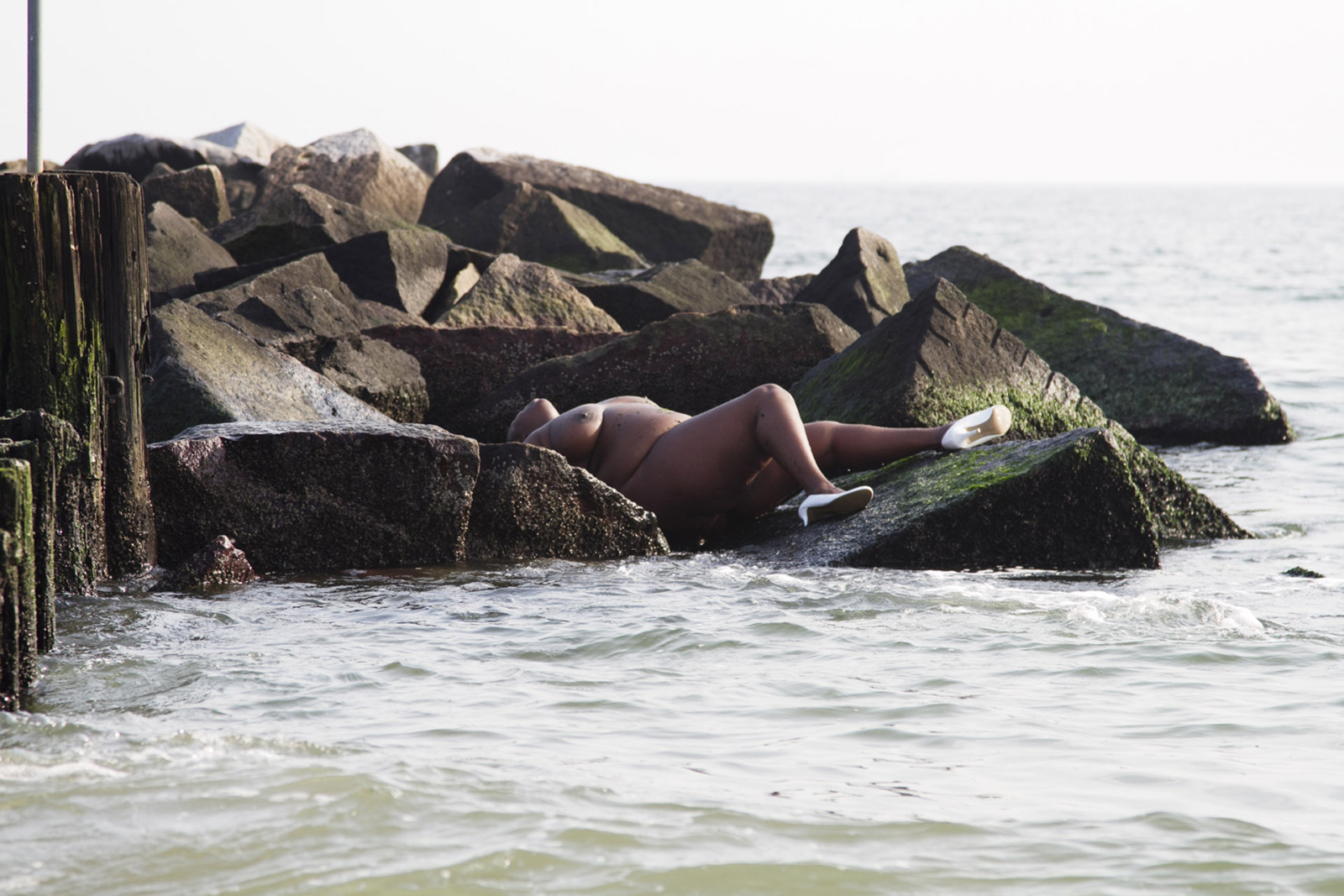
Sarah Charlesworth was born in 1947 in East Orange, New Jersey. She went to Barnard College where she received her BA and lived and worked in New York City. She died in 2013 of a brain aneurysm.
Charlesworth is a conceptual artist who looked at the photograph and "it's ability to deconstruct our shared symbols and public images in ways that articulate and question the values and beliefs of our culture." (artspace.com). Her website is clean and crisp. The home page was minimal, alongside an image from her Natural Magic series, only contacts for her estate and gallery business inquiries were available. The menu tabs were categorized with a section for each relevant topic.The website did not have an artist statement, so I took it upon myself to do extra research to understand her work and her life.
I was thoroughly impressed with the amount of work that was displayed, all of her works clearly organised. Each was broken up by years of the body of work, but also had the option of looking at everything at once. Some of her works had a shot text "about" the piece. I feel conceptual art is at times hard to grasp, so having a starting point is helpful in looking at and dissecting the work. My only issue was that not all of her bodies of work had an "about" text and half of the bodies that did, didn't have functioning text. Instead I was stuck with an unloaded image icon where the text should be.
The video explaining the story behind The Jumping Man, was the most relevant to that specific image.This work relates closely to that of the iconic 9/11 image of The Jumping Man. Unlike the images from Stills, the outcome and intention of the jumper is very well known. This type of image is iconic in the fact that as stated by the artists "it was the only photo that showed the death of our people that day". The image was quite, but powerful. Though it showed no gore, it became infamous. The Jumping Man is also a very relatable image because the viewer can put themselves in the situation and see that as a potential choice and rationalization behind the decision given the circumstances. The images from Stills are less static in the motions of the jumper, but they still convey a similar image without the backstory. They show a defining moment.
Charlesworth is most known for her Modern History which consists of enlarged images of newspapers with everything but the images and headlines removed. This work is still relevant to today in regards to how we as viewers, and the media itself ,documents and remembers war/crime/and headlines, but few details.
Questions: How do you feel the media portrays war/death/destruction news in the contemporary/present day?